The initial thing most teams notice when they stroll right into an arena is the quiet. No slide deck, no buzz of phones, simply the rhythm of steeds taking a breath and the scrape of hooves on sand. People reduced their voices on reaction. They focus. That change is the starting point Equine Facilitated Learning for better communication, since the very best conversations start with presence.
Horses are sincere communicators. As victim animals, they read purpose and feeling in a fraction of a second, and they respond to the whole message we transmit with our position, speed, stress, and focus. In a meeting room, words can paper over blended signals. In the company of a 1,000 extra pound mirror, blended signals delay the conversation, actually. The equine quits or drifts away, and the team has to determine why. That is where learning cracks open.
Why steeds help people speak to each other
Every herd kinds itself out without e-mails or memoranda. The shared language is activity, breath, and tiny modifications in range. A steed leans an inch and the herd shifts to make room. When we enter that field, we find out by participating, not by trying to dominate. If you crowd an equine, you will certainly see the cost of pressure. If you stand unclear, you will certainly see how management vacuum cleaners obtain filled.
Horses are likewise uncaring to resumes and duties. You can be the C-suite leader or the new hire, and the mare with the white celebrity will use you the same immediate feedback. Groups find that revitalizing, even soothing. I have actually seen individuals that hardly ever speak in meetings take a clear action, and the herd adheres to. Colleagues see it happen, right before them, after that later ask, Why do we not produce even more room for her voice at work?
The body discovers faster than the mind in settings such as this. You can speak about active listening throughout the day, or you can attempt to direct a horse with an alley of cones while your partner whispers directions you can not fairly hear. Your shoulders tighten up, the steed reduces, and your partner claims, I assumed I was being clear. All of a sudden the lesson is not abstract. It is apparent. That is experiential discovering with horses at its best.
Sorting the area: programs and definitions
There are several doorways into equine work, and the tags can be puzzling if this is brand-new terrain. A couple of distinctions help groups choose the appropriate fit.
- Equine-assisted services is the umbrella term several centers use for programs that include equine-assisted activities, equine-assisted training, restorative horsemanship, and sometimes psychiatric therapy with horses. Each solution has various goals and credentialing. Therapeutic horsemanship educates adaptive riding skills. It sustains physical, cognitive, and social goals for cyclists that benefit from mounted work, consisting of individuals with sensory processing distinctions or flexibility obstacles. It is generally not where company team programs live, however the safety and security and training abilities created there inform excellent technique across the barn.
Equine-assisted tasks for corporate teams focus on non-riding groundwork. You may halter, lead, bridegroom, or observe the herd in a field, after that complete promoted obstacles. This is often the best entrance factor for team building with horses.
Equine-assisted training and equine-facilitated training fixate expert growth and communication. A skilled instructor partners with a horse to help people and teams practice skills that transfer to function. The equine is not a prop. The horse is a real-time participant, which requires humility, clearness, and focus to consent from every person involved.
Equine-facilitated wellness generates a more powerful lens on law and anxiety. Breathwork, pacing, and selections are highlighted. Individuals dealing with high stress, burnout, or anxiousness respond well. Numerous teams have members that value anxiety assistance with equines as a nervous system reset.
Clinical solutions sit beside yet separate from team offsites. Psychiatric therapy with equines is a psychological health solution delivered by a certified clinician educated to operate in the barn. An autism equine learning program or ADHD equine discovering assistance runs within academic or therapeutic structures and follows clear range and safety methods. When a group consists of neurodivergent colleagues or those with sensory difficulties, it assists to work with a service provider that can connect both worlds. Alternate treatment for sensory obstacles is a broad summary, so ask for specifics on methods and credentials.
The most intelligent service providers are specific concerning these borders. Training is not treatment. Team building is not treatment. That quality protects the self-respect of the equines and the humans.
What a half day with steeds truly looks like
Programs vary by site, herd, climate, and objectives. A half day in my method typically runs 3 to 4 hours and focuses on 3 arcs: discovering, doing, and translating.
We begin at the rail of a paddock. No jobs yet, just monitoring. People pair up and compare what they see. One notices a gelding pressing one more. An additional notifications the herd moving as an unit to color. Somebody else notifications a peaceful horse placed between two greater condition horses like a buffer. Then we attach those patterns to the group. That in your group serves as a buffer when tensions rise? Does your group like to bunch up under stress or spread and scout?
After the rail work, we relocate to a series of brief difficulties in the field. The traditional opener is easy. Relocate this equine from one cone to the following, no ropes, no touching, just with your body language. Teams try to outthink it at first. They go huge. They walk right at the equine. The horse strolls straight away. Then a person softens their upper body, transforms slightly, and welcomes the equine by stepping into an arc. The equine sighs and adheres to. The debrief writes itself. When did pressing work? When did nuance do more?
As skills construct, the obstacles obtain split. We might provide half the group a limitation, like no chatting for 3 minutes or someone might lead each time. The constraint discloses behaviors. Some teams over coordinate and stall. Others improvisate a lot that no person recognizes the strategy. We enjoy without judgment, after that review what functioned and what requires a tweak back at the office.
Finally, we convert. Relocating equines is not the work. Working on a merging, opening a brand-new market, or rolling out a product is. We map the minutes that mattered to commitments with dates and names. If consensus structure aided obtain the mare through the slim chute, who will bring that light touch to the sales and engineering standup next Tuesday? Without that bridge, the day becomes an uniqueness, not a lever.
A brief casebook from the arena
A fintech startup can be found in fatigued from a sprint. In the first exercise, an item manager with social stress and anxiety depended on the edge, holding her breath. One horse kept bobbing his head toward her and stepping laterally right into her area in a gentle method. I asked if she observed. She nodded, however did stagnate. A colleague walked over and said quietly, I can run cover for you if you wish to attempt leading. She exhaled. They bargained a hand signal for assistance. She led the equine 2 steps, quit, requested backup, then went again. That fifteen minute arc became a team norm. Back at the workplace, they made use of the very same hand signal in meetings when voices increased. It sounds charming, yet it changed the space. Over the next month, even more individuals talked in standups, specifically juniors. They informed me later on it cut their meeting time by about 20 percent, mostly by getting rid of the dancing of who reaches talk.
A medical facility system struggling with turnover did a half day focused on borders. Registered nurses are outstanding at reading bodies. Horses made that visible. In one drill, a registered nurse maintained crowding a gelding to make him relocate quicker. He pinned his ears and stepped sideways, a warning. She stopped short and claimed, That is my work right there. I push, it presses back. In the debrief, the group developed a language for asking to slow the speed for security without embarassment. Six weeks later on, their supervisor reported less occurrence records throughout shift changes. That kind of correlation has many variables, yet the team kept utilizing phrases from the arena, specifically the concept of soft eyes and clear asks.
A production leadership team with a large split between plant and workplace staff appeared in early springtime. Mud all over, a cool wind, and skeptics piled three deep. We ran a quiet sorting workout with sticky notes on halters to recognize an imaginary assembly line. The office people tried to strategize from the rail. The plant individuals actioned in and got their boots dirty. Halfway through, they looked up and chuckled with each other. The functions had flipped. By the end, they had a running joke regarding gold boots, a little sign of functioning throughout the line. Months later, their operations lead sent out an image from a Kaizen occasion. 2 supervisors had actually spray-painted old boots and placed them on the table as a reminder.
Safety, approval, and ethics without drama
Good programs make safety boring by making it complete. You should see helmets supplied, clear field policies, and an introduction to horse behavior that speaks plain language. I prefer a 1-to-6 facilitator-to-participant proportion for foundation with green groups, and I will drop to 1-to-4 if we work with multiple steeds in limited areas. Closed-toe shoes, minimum, with hard-toe recommended in some barns. In warm environments, we add shade breaks and water coolers every 20 feet. In cold or windy climate, we change workouts to minimize startle risks.
Consent is not simply a wellness buzzword in this context. Horses get to state no. If a mare pins her ears or swishes her tail hard when a team crowds her, we stop briefly and withdraw. The lesson could be about speed and regard, not pressing through. People likewise reach opt out of direct contact if worry is high. Viewing from the rail with a co-facilitator and showing can be equally as rich. When individuals feel respected, they experiment more.
Ethics reach equine workload and treatment. Ask how many sessions the steeds do every day, what rest appears like, and just how habits concerns are managed. A good solution consists of restricted hours, differed tasks, and a plan to rotate horses so they are not overexposed to groups. Seek programs that worth equine-facilitated health for the herd as high as the humans.
A sample arc for a 90 min module
This is one method I structure a focused session for a team that wants to sharpen interaction without a full half day.
- Arrival and orientation, 10 mins. Security, equine body language essentials, and introductions. Herd monitoring at the rail, 10 minutes. Sets share 2 habits they see and what each might mean. Silent leading obstacle, 20 minutes. Relocate an equine between significant areas without touching, utilizing breath and setting. Debrief on stress and timing. Constraints drill, 20 mins. Exact same exercise with a twist, such as one leader at once or no spoken signs. Debrief on revolving leadership and clarity. Translation huddle, 20 mins. Name three patterns, after that assign a small habits adjustment back at the office with dates and owners. Closing check, 10 minutes. One sentence each concerning what they will attempt within 72 hours.
That sequence presses insight right into a tight window without hurrying the steeds or the humans.
What groups in fact find out, underneath the slogans
Clarity of ask. Horses care less regarding the material of your strategy and even more regarding the crispness of your next action. Leaders find out to create a simple purpose, straighten their body to it, after that act. Unclear requests produce unclear responses.
Pressure management. Stress is tolerable. Way too much, too quick, for too lengthy is. Groups practice titrating it. Much more existence, then much less. Step in, after that pause. The prompt equine comments songs that skill.
Listening past words. A partner's micro-flinch means greater than a long explanation occasionally. Groups develop sharper eyes for those cues, which equates to remote job too. You can hear the equivalent of a pinned ear in an email that gets much shorter and sharper over a week.
Repair after mistakes. If you crowd a steed and it reveals discomfort, you can reset your distance and try once more. No lengthy apology tour, simply a better move. High functioning groups obtain good at that type of tidy repair.
Healthy borders. Several teams battle to state no. Equines make it visible when a line has actually been crossed. Exercising a firm, kind border with a 1,000 pound colleague helps people attract lines with a 200 e-mail inbox.
Adapting for different nerves and needs
A skilled company builds for varied minds and bodies from the beginning. For colleagues with ADHD, short, clear jobs with movement keep engagement high. ADHD equine learning assistance often favors rapid responses cycles and visible success. Horses are perfect companions for that because they react at the rate of attention.
If sensory challenges exist, alternate treatment for sensory challenges in a coaching framework might imply changing ground surface areas, providing ear protection on gusty days, making use of soft lead ropes, and preparing clear leaves from the sector. Some individuals regulate much better with the sluggish rhythm of grooming, so we build that in. Anxiety support with steeds fixate pacing and company. We never ever compel closeness. The rail is a legitimate understanding position.
Autistic participants often flourish when predictability is valued. An autism equine learning program within a group context could include aesthetic schedules for the session, a clear map of the sector, and regular hints. Directness is welcomed. Among my preferred minutes was when a quiet analyst considered the mare, then at me, and stated, She is disregarding your vague directions. Please be precise. He was right. Most of us chuckled, then most of us got even more precise.
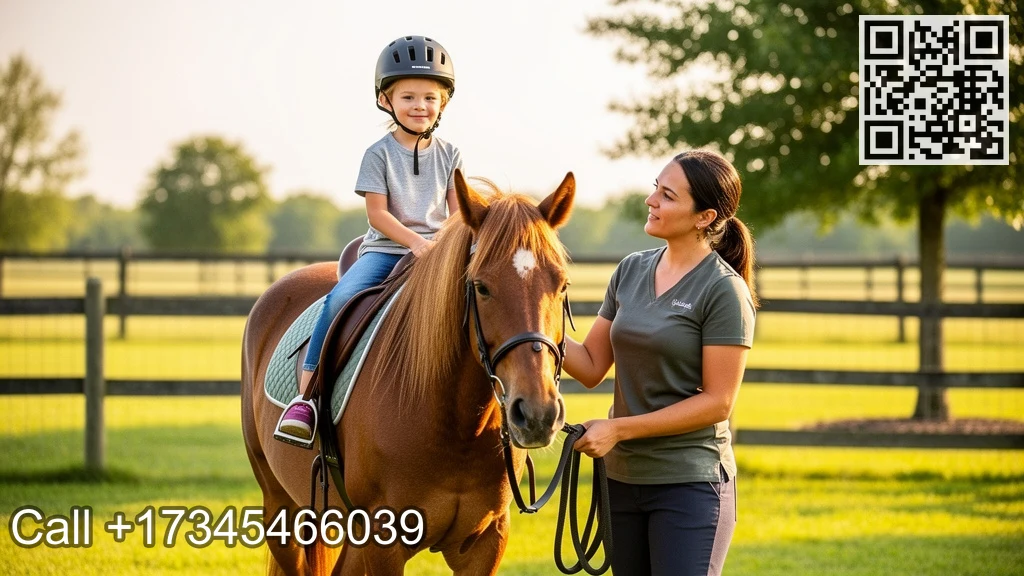
Accessibility does not finish at eviction. Ramps, wide aisles, and ideal placing blocks matter even for foundation days because they reflect a facility's attitude. I have trained groups with a member in a wheelchair right at the rail, routing the circulation and naming monitorings with medical clearness. Management is not a feature of leg position.
When this is not the best tool
This job is powerful, and it is except everyone or every season. Extreme steed allergies or bronchial asthma that flares in barns are actual barriers. If a team remains in acute situation or trauma, clinical support takes priority. Some individuals bring a worry of large animals that spikes arousal so high that finding out can not happen. Online or indoor simulations can be a bridge, or we focus on pasture monitoring from outside a fence.
Weather can make or damage a day. High heat, lightning, or icy footing are nonstarters. Develop back-up dates into agreements. And for some societies, the symbolism of horses does not resonate. The factor is not to force relevance. The factor is for groups to involve with a hhooves.com real, receptive system that educates through communication. If that is not steeds, locate one more real-time system.
Choosing a reliable provider
A little homework goes a lengthy method. Utilize this fast checklist when you vet programs.
- Ask regarding credentials for both steed handling and facilitation, not simply one or the various other. Seek training in equine-assisted training or relevant areas plus strong horsemanship. Request an example schedule with clear discovering objectives tied to work outcomes, not just fun with animals. Clarify security ratios, equipment, and emergency plans. Confirm insurance coverage specific to equine activities. Ask how they adapt for neurodiversity, movement differences, or stress and anxiety. Pay attention for sensible, respectful options. Observe the horses ideally. Tranquil eyes, complimentary movement, and turned work point to excellent care.
Equine-assisted services is a broad label. Great questions aid you find the appropriate branch for your demands, whether that is equine-assisted tasks for a light offsite or deeper equine-facilitated mentoring for management cohorts.
Making change stick after the arena
Practice is where the luster either fades or hardens into habit. I ask teams to select micro-rituals they will keep for 30 to 60 days. One remote team developed a simple pause procedure. At the 25 minute mark in meetings, anybody can claim, Soft eyes, and the group takes one silent breath together. They attribute it with lowering interruptions. An additional team adopted a one step ask rule. No piled needs. One clear request, then wait for the response. That mirrors the clean hint a horse understands.
Managers can reinforce understanding by calling out moments that echo the field. When somebody notices stress surge and modifications their distance metaphorically by asking for a smaller conference, claim it. Do not transform the experience into folklore. Harvest it in real time.
Measure gently and truthfully. Message workshop eNPS bumps are nice, but thin. Much better signs consist of less backchannel information, shorter conferences, faster decisions with less rehash, and more people contributing in standups. You can track those as habits for a month without shortchanging anyone.
What facilitators wish teams understood on arrival
Bring boots you are not priceless regarding and an open mind. Anticipate to be shocked by who radiates. The peaceful engineer could locate her stride at the horse's shoulder. The extroverted supervisor might discover the value of stillness.
Do not try to win. There is no scoring. The equine does not care. Focus instead on signal clearness and team attunement. If you obtain stuck, check your breath, check your range, and examine your focus. You probably altered one without noticing.
Debriefing is the actual work. The sector is a laboratory. The office is the field. If you are tempted to pat a steed, take a selfie, and stop, miss the barn and go for a walk. If you prepare to practice somatic healing with steeds in one of the most sensible feeling, implying you regulate your body to boost exactly how you talk and pay attention at the office, the herd has a whole lot to teach.
A closing image from the pasture
Last loss, a cross-functional group gone to on a crisp early morning. We ended with a release exercise. One at a time, people called a behavior they wished to put down for a while. Talk over others. Stay clear of difficult responses. Hold-up choices. They breathed out, after that walked across the sector and positioned a little rock on a fencing post, a physical marker. The horses were at the far end, heads down in hay. As the last individual positioned their rock, a chestnut gelding lifted his head, chewed, and ambled over at an easy stroll. He stopped with his nose near the stack of rocks, sniffed, and stood. No one spoke. The moment was not magic, simply powerful. Then he sighed, that deep horse sigh that loosens every shoulder around him, and the group appeared to take a breath with him.
There is no PowerPoint slide for that. There is just the lived memory of a herd revealing us just how to be with each other. If your team requires a reset, wants to exercise more clear asks, or wants to develop genuine count on without large speeches, take into consideration spending a morning with great horses and good facilitators. The field is straightforward. The lessons traveling. And the path from rail to office is much shorter than you assume when you allow the herd set the rhythm.
Happy Hooves Wellness
9177 Gross Rd, Dexter, MI 48130
+17345466039
https://www.hhooves.com/